Follow adamrees on Twitter

Wednesday, May 11, 2011

Olympic Lift Variations Worth Doing: Part 2

What variations of olympic lifts would I use?

1) Unilateral Dumbell Snatches.

It's much like the kettlebell swing. Quick learning curve. Athletes learn how to load their hips. It's unilateral so your strengthening and reinforcing good movement patterns. The gripping hand and the opposing hip are having to work synergistically to move the weight in an explosive manner. It's plain and simple a great exercise.


2) Unilateral Dumbell Jerk

I wouldn't use this as a max effort movement, I'd think of this exercise as more of a core exercise. Being on one side displaces the lift so you load your hips differently providing a change in stimuli.


3) If I were to do Snatches w/ a barbell

I have a client I've worked w/ for a long time, and he loves doing cleans and snatches. So like I said in Part 1, if your main goal is a PR in cleans and snatches then great, do them.

But I'd make one little change. Bring your hands in. The only reason a wide grip is to decrease the distance the bar has to travel and so the catch is easier when sitting deep underneath. That's it.
See what I mean? Grip width doesn't really matter until you start maxing out.

So make your hands the same width as your shoulders, just like a clean grip. You'll go down in weight a bit but this will really save you and your shoulders a ton of headache.. Then once a month whether it's just to practice or actually max out take your normal wide grip again.


We Don't Do Olympic Lifts: Part 1

I've said it before and I'll say it again. We do NOT do olympic lifting. This is not to 'try' and be different or to create some kind of separation from other coaches. I simply feel that the affect produced by the movement is not worth the process/learning curve and that there are other movements and lifts that do a better job and have a faster learning curve.

Simply put the juice is not worth the squeeze.
And neither was she in that movie....just sayin.

Just to be clear and for those that are not familiar w/ the olympic lifting game. I'm referring to barbell:
-Cleans
-Snatches
-Jerks

Just as a side note:
I realize just how ludicrous it seems to hear and how quickly this post will be dismissed by many but after years of arguing w/ myself this is the conclusion that I have come to. I'm willing to bet that a lot of people will be surprised in a couple years when enough studies have been done that come to the same conclusions as I have, mark the date it's Wednesday, May 11, 2011. I'm sure they'll be able to convey a much more scientifically based message as well.

If you are unwilling to give up your clean that's fine, it's your program but I at least hope that:

A) you can keep an open mind throughout this post and
B) I hope your not a coach/trainer/person that emphasizes the 'shrug' while teaching/doing cleans, that is not what the lift is about.

Cleans
Sure the clean is great. And the process for teaching it can be great as well. Everyone knows it:
1. Teach kids how to hang pull quick w/ stiff arms
2. Teach a high pull from hang clean position
3. Teach hang clean
4. Teach power clean


This is a hang clean, much like a power clean you just don't take it all the way to the floor and it's extremely technical. Your main pull is only about 5"-8" and momentum should carry it the top. I also don't like messing w/ the wrist in/flexibility.

But this process takes an entire month. My athletes don't have an entire month, and neither do I. I consider myself a very patient person, but I hate waiting on things (and I realize how much that might not make sense at first). But an entire month to get a lift?

Mainly I don't feel the "product" of a clean and snatch are all that great.

Yeah they're post chain dominant, triple extension, explosive movements but the affect we get from them is not enough to program them above other exercises. I'd rather get my athletes going on swings and trap bar deadlifts and do it the first day. I feel like they get a better training affect, can control and feel through the motion better, and athletes pick both up extremely fast, I'll go into more detail about this later.

A closer look at Snatches (not a joke)
Now the reason I or my athletes don't do barbell snatches is a different deal. To me it seems that if you'd like a shoulder impingement then snatches would be a good decision.

This idea started back in the summer of 2005. Before attending Wartburg I'd not done many snatches. After one season of Wartburg football workouts I'd done hundreds. We always dropped the weight from the top, which was a first for me, but when I lifted back at my high school over break I couldn't drop the weight and had to catch it. I don't know if I remember feeling my shoulders wrench like that in my life. I wrestled, pitched, have had one dislocation and two third degree AC seperations, and both shoulders were doing it w/ each catch.

Fast fwd one summer during my internship w/ Coach Matt McGettigan (of which I'm extremely thankful for this guy he's an incredible coach and I would suggest working under him even if just for a short time). I asked Coach McGettigan why he didn't have his athletes doing snatches, I mean we did them at Wartburg all the time. He said, "If you like shoulder impingements." And it makes sense, on the way down you're catching the weight w/ your shoulder in it's most vulnerable position and you have X lbs on the bar. Looks bad to me. Same reason I speak against upright rows.

Can you imagine catching this on it's way down?

Getting into the Jerk
We also did tons of jerks at Wartburg. I don't really feel like I should need to explain this to anyone, b/c it seems so obvious. But basically this movement really doesn't have much carry over to the field, mat, court or track. If you're a powerlifter or olympic lifter then great, you gotta do them. It's like a basketball player shooting hoops, of course it doesn't aid his/her athleticism but it definitely makes them better at their sport.

This is a clean and jerk. Obviously this guy is an olympic lifter and that's his thing so of course he should do it. But my athletes aren't going for a one rep max jerk. So we do things differently.

Outside of actual olympic lifting competition I'd say the jerk is not much more than a core exercise. But it'd be a very good core exercise. Holding that much weight above your head, you'd be bracing and stabilizing like crazy. But the jerk doesn't really take us through any range of motion.

So there's my reasoning for why my athletes don't do olympic lifting. Mainly b/c they're high school athletes playing multiple sports like football, wrestling, baseball, volleyball, etc. This requires them to move in multiple planes, and they're programming needs to reflect those needs, of which olympic lifts don't fit w/ as well as other lifts and movements.

I do use some variations of olympic lifts which I'll go over in Part 2.


Monday, May 9, 2011

Stuff you should read: Nutrition

It's pretty well accepted at this point that w/o a solid nutritional foundation we're going to be sick, stupid, and fugly. I'd say that the majority of people know that eating at McDonalds 3x/week is not a good nutritional strategy. But I'm also surrounded by people that are either on their way to becoming more healthy or they already are extremely into nutrition.

This is a collection that comes from some of my best nutritional resources.

And it's great b/c........they're all FREE!

John Berardi


Brian St. Pierre

Jonny Bowden

Stuff to watch

Food Inc. was a great movie and well worth the watch. Safe to say that you'll never look at chicken the same way again.


Stuff to watch for:

Forks Over Knives hasn't been released yet but I'm excited to see it.


Monday, May 2, 2011

4 Stretches for tight hip flexors

The average athlete walking into see me looks approximately like this.

This is almost exclusively caused by tightness in the anterior portion of the hips.

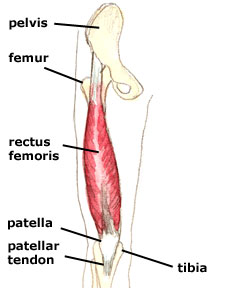
Typically a combination of all 4 hip flexors: TFL, Psoas, illiacus and Rectus Femoris. Some people don't consider the Rectus Femoris as hip flexor b/c it is actually a quad muscle, but I assure you it flexes the hip and you use it every time you pick up your knee.


Mobilization and stretching is absolutely pivotal in this situation.

Here are a few of the main stretches we use.


This is a simple hip flexor stretch however I often see people not doing the it justice.
Tightening the abdominals and glutes will increase the precision of the stretch.
This stretch will also behoove those w/ TFL and Psoas issues much more than people those w/ rectus tightness.
And it's convenient when working at a desk for continous amounts of time. Throw a pad down and switch knees every 15 minutes or so.


You can also use a box to create a deficit


Creating a deficit like this forces the hips closer to a neutral position causing the opposing muscle groups to stretch each other.

Here we're going to be stretching much more than just the hip flexors. We'll get some hamstring and adductor as well but will greatly increase the stretch and learning curve for the stretch from the above example.


The Rear Foot Elevated Hip flexor stretch can be done multiple ways. At GRIT we almost always use the wall.


If you have rectus tightness you'll know right away w/ this one. We use it w/ every athlete and every workout.

Or


The Rear Foot Elevated Hip Flexor Stretch targets the rectus femoris (not exclusively). As you can see by its attachment points. Just by elevating the back foot we greatly increase the stretch through this muscle due to its nature as an extender of the knee.


We can also group these stretches.


I feel like you get more out of the stretches this way but some people are just plain not flexible enough to get into position in order to perform it.

I call this the Rear Foot Elevated Hip Flexor Stretch from Deficit. Longest name of any stretch I've come across yet....just sayin.


Wednesday, April 20, 2011

Getting Recruited

We all know that the time is now, and every second we wait is one we're not getting back. Yatta, yeata, yata..... (figured I'd go w/ three different possible spellings.)

Everyone wants a Division I scholarship and it feels cool when you get pulled from class to the principles office and instead of being in trouble it's actually a football coach that's there to recruit you. Then you get to go back to all your buddies, they're asking what's up,why was *so and so* w/ all the *enter school of your choice*'s gear on talking w/ you, and all that jazz. I'm not gonna lie, I remember feeling like a total BAMF.

But that's probably about as cool as it ever got. Really no one tells you how full of crap some of them are. Or that probably 25% of the time it's actually a guy trying to sell you some kind of service that'll supposedly help you get recruited.

Always sucks when you walk in and see this guy.
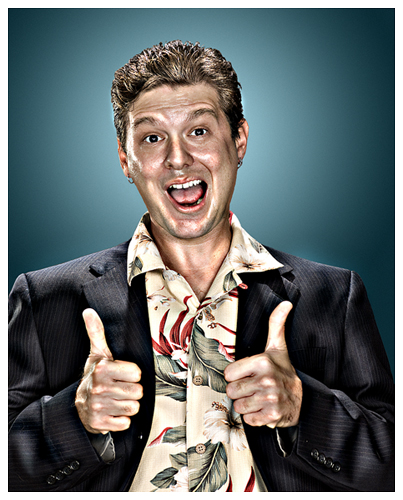
Guess it's better than being in trouble though.


Now I've heard a few feelings towards the recruiting process.

-If you're good enough you'll be found

-You gotta put on a campaign for yourself and send highlight videos everywhere.

-Go to as many camps and combines as you can, showcase your talents, and network w/ all the coaches and recruiters

-You have to hire a recruiting agency to create highlight videos of you and send them across the country.

-Blah, blah, blah... No, No, NOOO


Okay, here's what you have

Your kids have 4 years of high shool sports period there is no more, and they only have 2 that they'll be able to be recruited during (freshman year no one looks, sophmore's have to be something really special to get on the radar, junior year is the big year to get noticed, senior year scouts have already decided who they're going after).

I grew up in small town Iowa. It's pretty rare that a recruiter is going to come to a small town game b/c s/he's only going to be able to see 1 or 2 potential recruits. So unless your team is very good and you have multiple specimens on one team, then your chances of being found are not as high.

Not every position is going to get the spotlight. If you're a baseball pitcher, you'll probably be found, same w/ a running back and other glory positions, but linemen don't get noticed.

It was a lot less like this

And a lot more like this

But add a few players (I played 11 man) then replace the 'ranch' w/ some trees, corn fields and cows. Not joking.


Here's what you need to do.

1) Take care of yourself. Your performance is everything.

First and foremost you gotta be in top physical shape. By the time your junior year rolls around you gotta be very very focused and have to have put in the work.

-Take your offseasons, but don't sit on your ass

-If you wanna do all 4 sports go ahead, but that doesn't mean you can slack in other areas. If you wrestle that doesn't mean we can be cutting enormous amounts of weight, and not lifting. Just like everything else we have to do it the right way. Power output doesn't mean we have to have huge muscles.

-Sleep, Eat, and Recover correctly

-Train like a madman. You want this then its on your shoulders.

-Eat right: breakfast, stay hydrated, protein throughout the day, lots of fruits and vegetables, time your carbs but get enough of them.

2) Show the world

-Perform. You've prepared, you're ready, now get it done.

-Sending videos doesn't hurt. But remember recruiters get videos all the time. Include your stats in a readable manner:

Name:

Height:

Weight:

40yrd:

Pro Agility:

Vertical:

Broad Jump:

L Drill:

Squat: if it's good

Bench: if it's good

Feats of strength don't hurt: For example, if you can do 10 good pullups w/ an additional 100lbs, I'd probably throw it in there.

-No one cares about your track times or your wrestling record. If you placed at state mention it. If you have a wow factor use it otherwise it's just a number.

-Be honest but leave out anything bad. Don't mention any previous or current injuries, ever! Never ever admit to a weak point. I used to be kinda proud of all my injuries, felt like it showed my toughness. Another friend of mine had his scholarship pulled soon as he got a herniation in his back.

-Social media is making things interesting. This is where networking pays off b/c you can expose yourself to friends of friends of friends very quickly. Don't be afraid to post a video on facebook of your squat, deadlift, bench, or performance highlight, even if it's practice.

3) Going to camps is a must. But not at the cost of your season. Training preparation comes before any camp.

I hate to admit that camps are pivotal but it but it's true. The problem I'm seeing is that kids are going to 4-6 camps a summer. This is way too many, and not going to allow enough training time nor rest time. So kids end up going into the season under prepared and not having the season they needed. Remember reason one.

Number one thing an athlete must do to be recruited is to perform. Plain and simple.

-while your at camps, perform. You gotta be the best version of you all the time, no matter what.

-Show character: this means working your ass off (and making that work look easy, don't show weakness), doing things crisp and correct, showing up early, showing leadership (which means be a leader while you're there), etc..

-parents/coaches should spend at least a couple of days observing and networking w/ the staff, coaches and other parents. It goes w/o saying that you should write down peoples names after you meet them so you remember who to look up later.

-Kids should bring a video w/ them if they have it.

-Be forward w/ the team's coaches. You want to be recruited. Say that, "I want to play here." Coaches like that, they'll remember you, and it shows them your commitment and character.

-Always meet the strength coach, and make sure he remembers you.

-Keep it to less than 3 camps/summer. Anymore and we're losing too much time. The season is the first priority to getting recruited and it should be anyway.

4) Follow up immediately

Don't wait one week. Get on email, facebook, w/e and email all the coaches you meet or want to play under as soon as you can. Keep it short and sweet. Under 6 sentences.

5) Do NOT hire a recruiting agency. They're a rip and full of dip shit life failures that probably got fired from selling used cars, women's cosmetics, or vacuums.


That's how you get recruited. You gotta prepare and perform, the other stuff just helps a little.




Monday, April 18, 2011

Anterior Pelvic Tilt part 2: What we do at GRIT GYM

2nd installment of Anterior Pelvic Tilt: What we do at GRIT GYM


First off the hips are the center of our bodies, they are also the center of movement, the difference between fast and slow athletes is many times directly correlated w/ the function of their hips, good or bad.

This is interesting b/c what if we can make every athlete's hips better and the whole team takes 1/2 a second off their 40yrd and pro agility times.

Remember these?

They guaranteed to take .2sec off your 40yrd time and we thought that was a huge amount of time.

At GRIT Gym we've been working on extension based exercises, w/ nervous system reaction forces as well as almost zero conventional "core" work and getting incredible results.

Focusing mainly on the function and efficiency of the body seems to have a larger impact than simply seeing how much a kid can lift. Especially in the long run.

Simply by working on getting athletes hips mobile and using specific strength exercises I've seen a consistent .3-.6 sec drop in my athletes times. This is mainly for the 40yrd and pro agility.

What are some of the things we do. Well,
we warm up properly
-SMR
-Mobility work: mainly thoracic spine, anterior portion of hips, and ankles
-Activation
-Dynamic flex
we don't do a ton of sprinting
we do quite a bit of movement training
-Med balls
-plyos
-bands
-shuffles
we keep the plyometric volume fairly low
we don't really do olympic lifts
-my feeling is that the difference between a clean, kettlebell swing, and deadlift is mostly the amount of time it takes to learn each. The kettlebell swing and deadlift give more bang for their buck and the learning curve is quick. Cleans take forever to learn, and I feel like the other two better aid in my athletes progress.

We don't do any long distance, steady state cardiac work. Non, Never, Zip, Ziltch, Ever, Ever, Ever!!!

-We do interval work and complexes but we almost never do anything over 30 seconds.
-there's too much fun stuff for this. Prowlers, ropes, dual action bikes (yeah that one isn't fun), but kettlebells are, short sprints, shuffles, competitions. etc....
-and the majority of my athletes are 16 and under so not only is long distance work not going to help them in anyway its actually very dangerous.
-Its been proven repeatedly that volume is directly correlated w/ injury. Simply put, you run too much and you'll get injured
-It also will suppress immune systems
-Decrease endocrine system activity (during a very developmental period of an athletes life)
-Can potentially stunt growth. If an athletes joint capsules aren't fused, which really doesn't happen until about 21-26 years of age.
-Probably the worst is that long distance stuff makes kids SLOW. You can't get faster by moving slow all the time. You'll just be getting better at moving slow and that's about it.


We do quite a bit of barefoot training, but we're not doing anything stupid like sprinting, and cutting w/o shoes.

The atmosphere is fairly light until it's time to get to work then we go hard.

Kids learn to make better life choices. Like what goes in their bodies (they know what a good breakfast is, and don't drink a ton of pop), how to stand up for themselves, lifting and training naturally raises your self esteem and confidence, working smart and working hard exacerbates this.

I've said for a long time that the first step in self improvement is elimination.

I stand by this. You want to make your life better, remove the crap. You want to be a better athlete remove the crap and stick w/ what works. We don't fill programs to make the athlete "feel" like they're getting better (and I use the quotes for a reason, I'm being extremely cynical). Sure they might be getting stronger on another program doing it that way. You're body will react to imposed demands, but that doesn't mean that you are becoming a better athlete. Talk to me when you can move faster while using less energy, that's what we're going for, b/c that's the program that's gonna take an athlete to another level. When s/he can be tons faster at the beginning of the game and strong enough to last to the end.


Simply put, get a kids hips to open up after 7 hours of sitting in a desk (w/ mobilization drills), take a minute to activate the areas that are going to be lacking (particularly the glutes and probably psoas) and we'll have given our athletes a drastically different chance of being successful and healthy.

I'm off to the gym to take some videos of what I'm talking about. Let me know your thoughts below.


Anterior Pelvic Tilt

You gotta figure out your pelvic tilt. Until then your performance will suffer, no matter what sport your participating in.

Pelvic tilt goes something like this:


And it's caused by tight hip flexor muscles. You have 4 hip flexor muscles: the Psoas, TFL, Iliacus, and Rectus femoris but non the less your hips tilt fwd and you put yourself in a poor mechanical position that can lead to nagging injuries and you just plain and simple wont be able to perform as well, plus you'll look like you have a belly (see above).

Your glutes wont be able to fire correctly or as efficiently as they could b/c they are inhibited by the tight/shortened hip flexors.

This will put the hamstring in a pre stretched position b/c the posterior portion of the hips are higher than they should be. This is bad. You know any athletes w/ nagging hamstring issues.....it's probably b/c their pelic tilt sits to far anteriorly.......Not good.

Anterior pelvic tilt will also lead to an increased lordosis. In other words your lumbar spine (lower back) is going to have too much of a curve.

Sounds like no big deal right? I mean, it already curves right? Well, increasing the curves of your low back means you aren't as tall, your belly will stick out further making you look like you have more bodyfat than you really do, it's really bad for your back, will probably lead to pain, and its potentially not healthy for the nerves that innervate that area.

What to do
Working on stretching your hip flexors will go a long way.
Most people will need more than that though, and that's where activation and strength comes in.

Next post will be on stretching and lengthening the hip flexors, activation, and strength work.


Tuesday, March 1, 2011

Pile Driven for your rotator cuff practices

I notice things that people do fairly often, and I like to think that I'm a patient person. For instance when I absolutely want to form tackle someone into next week, I almost always refrain and walk away. B/c I realize not everyone is the same, we all have our own worthless opinions and the only reasons they're worthless is b/c we can't do a thing to change the other person's. But when I see a professional doing stupid stuff w/ their athletes or clients in the gym it really bothers me. So, after pile driving this individual, I came up w/ the top 3 things people do in regards to incorrectly training the rotator cuff.

#3 Doing multiple short sets for the rotator cuff.

The rotator cuff is a small muscle that’s main job is to keep the shoulder in place and absorb force/decelerate the arm. It does not need to be over loaded repeatedly w/ rest times. It needs to function, function long enough (endurance) and be strong enough to absorb force, keep the shoulder in position, and decelerate the arm.

I participated in a program once (it was college, we had no choice and didn’t know any better) where one day/wk we had 3 different rotator cuff exercises for 3 sets of 20 reps each. That means the entire football team sat there and did rotator cuff work for 10-15 minutes one day/wk. This is extremely excessive, and had an incredibly low ROI (return on investment).

Programming rotator cuff work is completely dependent on the athlete, time of year, sport, ect. But it’s a safe bet that 1 set of 20 reps one or two days/wk at the end of a workout, w/ a side lying external rotation exercise like this would be safe and beneficial for almost any athlete and the general population.


I also think it's much better to have something between the arm and torso, especially if using bands/pulleys in a standing position. I couldn't find the study but placing something simple like a towel between the arm and torso for external rotator cuff work increased EMG activity by close to 30%. Which makes sense, you use better technique that way w/ your arm closed off and pivoting at the shoulder like you should.

#2 You don’t need to progressively overload your rotator cuff like you do your squat, bench, or deadlift. It doesn’t work that way.

I’ve seen guys using over 20lbs for external rotation exercises. Your rotator cuff is a very strong muscle but that doesn’t mean that it is going to be able to move massive amounts of weight. It is not a fast twitch muscle like your glutes or hamstrings. It is a very small muscle and not meant for that. For most exercises anything over 5lbs or a very light band and you are wasting your time.

#1 thing that annoys me in regards to people training the rotator cuff

People using the empty can test as an actual exercise. The point of the test is to gauge problems of the rotator cuff. You are literally exacerbating the impingement to get a better look at how the shoulder is functioning.


The empty can test is not a go to exercise for the rotator cuff. Most people’s shoulders are just gonna get pissy doing an empty can test too many times, let alone adding resistance.

We've known this for a long time. The empty can is also not going to let us significantly pinpoint the area we want to work. According to Boettcher, Ginn, Cathers the empty can is going to recruit much more of the deltoid, which leaves the rotator cuff w/ a subpar role in moving the arm. We want to significantly recruit the external rotators of the rotator cuff. Although rear delt recruitment is not a bad thing, in this case we want to get in deep w/ the cuff. And we don't want to piss it off, and inflame the impingement.


Tuesday, February 22, 2011

Making my case w/ the Creatine loading phase

I've never really agreed w/ the creatine loading phase that is usually instructed on the outside of containers anyway, how most novices consume the product in general or why they even buy the stuff in the first place. But I digress.

We know that after 2-3 weeks of taking a normal serving size (which is a relatively small amount, 5 grams) of creatine our bodies levels will get to the same levels as that if we were to use a loading phase.

The idea of a loading phase is that it only takes a week. But this loading phase requires us to take around 20g/day for a week.

All a loading phase will do is increase the price of your piss. Literally

Creatine is a diuretic.
Any extra that your body can't absorb is going to be excreted in your urine, which makes it sound extremely safe like water soluble vitamins, and you take tons of Vitamin C when you get sick (even though I have yet to see any viable research that would prove access VitC to help your common cold after you're already sick).

Peeing all the time makes your more susceptible to dehydration, cramps, and gastric issues (of which creatine is heavily linked).

As far as my problem w/ how novices consume the product. Your body can only accept around 5g/day of creatine (depending on the person). So what's the point in forcing it.

As far as why they bought the stuff in the first place. Probably b/c the wanted an excuse for why they can't hit a lift when they "forgot" to take their creatine that day. Duuhuumb. Creatine might help you hit an extra rep or two on some of sets, it has nothing to do w/ immediate force output. And that's even if the lifter I'm making fun of right now has even trained long and consistently enough to even be able to put up anything substantial. I'll just go ahead and stop there before this turns into my normal tirade against the typical weight room hero that only workouts in spandex shirts, baggy sweatpants (to cover his chicken legs) and sweatbands even though he doesn't really sweat, but loves to put on a show loading up his supplements in the locker room, and doesn't really have anything impressive anyway.
To step away from making fun of probably half the people at my first job in the profession. Creatine works. There's no doubt about it. The stuff was a great find. See Pubmed article here. But the majority of people that even do lift heavy are going to get more from a preworkout meal than swallowing some creatine powder.

Really, creatine is fine for most people, it even has a role in brain health. Taking 5g/day is probably fine, depending on the person. I'd urge you to get tested first. But there's really very little need the supplement unless you've been training heavily for years, and have exhausted all your resources.
To wrap things up, in my professional and layman opinion it seems like taking an extra week or two to get the full affect of creatine is superior to loading.

If you are going to take creatine. Stay under or around 5g/day. Keep it simple and go for Creatine Monohydrate. If you're in high school, don't control or don't know what your workouts will include then take it before bed.

If you're only lifting, are in good shape and not doing conditioning then it'd be fine to take before the workout. But taking it before practice, games, or conditioning is asking for cramps and injuries (and not b/c your ripped) or sitting on the toilet for the next day or two.


Monday, February 21, 2011

What I learned from a 2yr old the other day

Good story for you.

The other night my little sister and nephew were riding in the car and he kept looking at the stars. Btw, my nephew is a funny little 2 yr old kid that does w/e he wants w/o fear and everyone says how he is just like me when I was that age so it kinda hits you. But he has no fear and doesn’t have any stitches, scars, or black eyes yet but probably will, just like his uncle. But when he refers to my little sister Maggie and I he says “My Maggie” and “My Adam”.

So the other night he’s in the car looking at the stars, and I guess it went like this.

Maggie: “Aren’t the stars pretty Jacob?”

Jacob: “Get one for me Maggie”

Maggie: “I can’t they’re too high”

Jacob: “Jump Maggie”

Maggie: “I can’t Jacob, they’re still too high.”

-Pause-

Jacob: “I bet my Adam could get one.”

I thought it was awesome, and totally killed me.

But really we should all be reaching for the stars. Too high to reach jump, and if you can’t get one find someone who can.

Just like anything else, get someone that’s been there, knows what they are talking about and can help you grab your own stars. If it’s w/ sports than jacob probably has a pretty good chance. His mom was a division I athlete, he’s bound to be pretty decent.

The great thing is that I get to be a role model for this kid and show him that he can grab a star for himself, and then I get to be there when he does.


In the mean time, here's a circuit you can try out. We used it to finish up the other day after a heavy leg week.

I have a circuit for you

Pullups x8

Prowler push x15 yds+return

Alternating Ropes x30 seconds

Facepulls x12

3 sets and the facepulls are there as active rest time.

Keeping it simple.